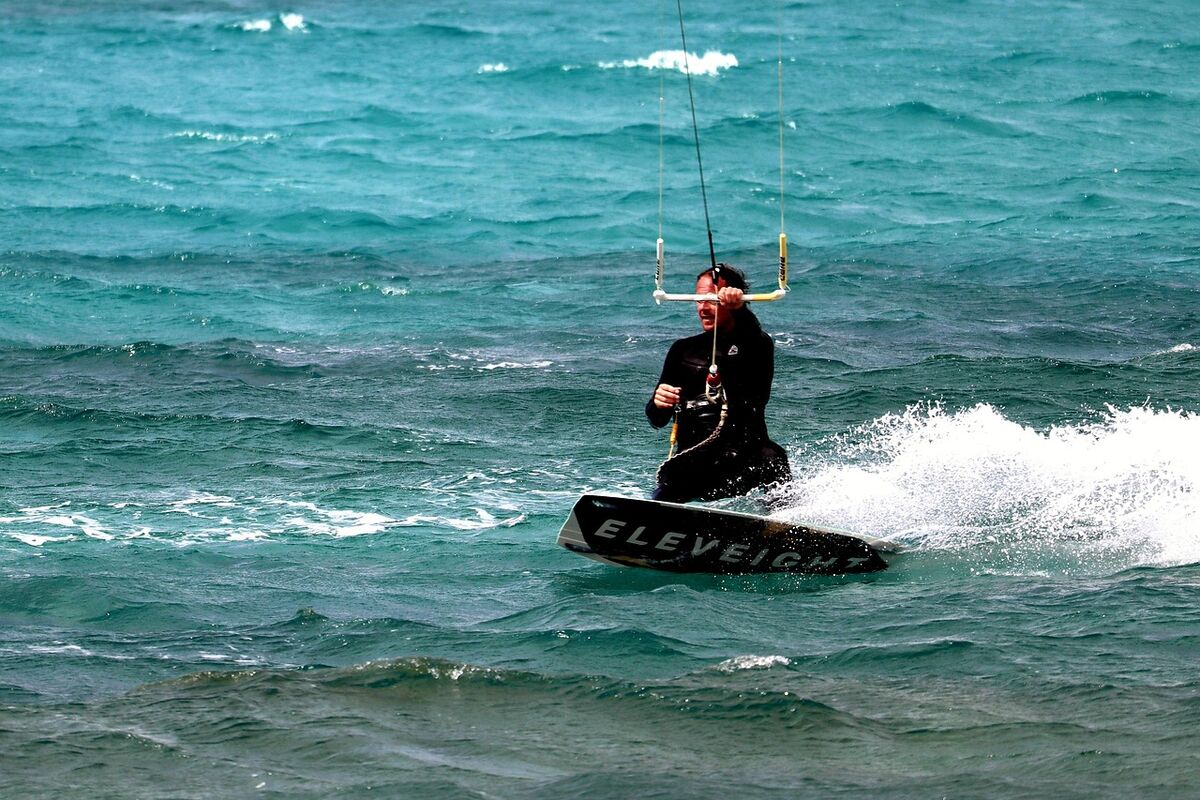
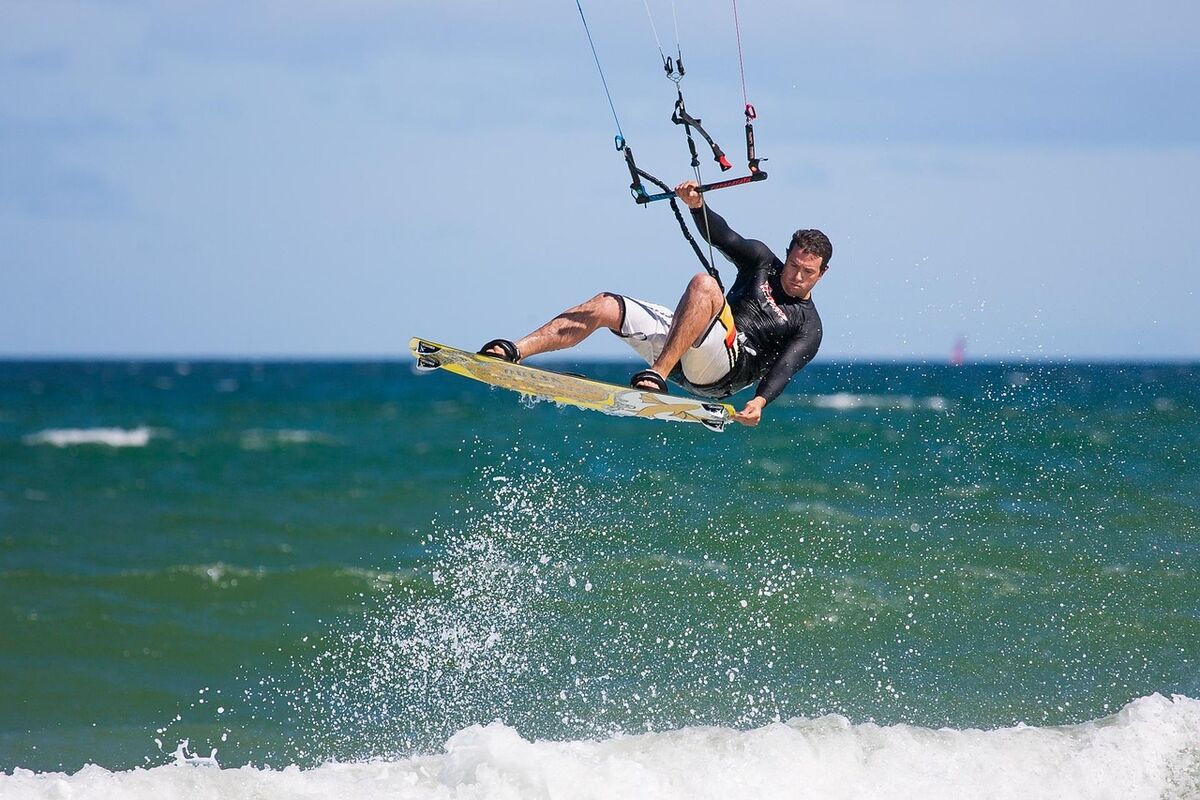
Kitesurfing (or kiteboarding) is a water sport that combines elements of surfing, wakeboarding, paragliding and sailing. The rider stands on a board and is pulled by a large kite, harnessing the power of the wind to glide over the water, jump and perform spectacular manoeuvres.
Born in the late 1990s, kitesurfing has grown exponentially to become one of the most practised water sports in the world, with millions of enthusiasts and international competitions culminating in the Olympics.
The principle is simple yet brilliant: an inflatable kite connected to the rider via 4 or 5 lines and a control bar generates traction by harnessing the wind. The kiter, connected to the kite via a harness, steers the kite through the sky generating power and speed.
The board under the feet serves to glide over the water and provide direction. The combination of wind, water and gravity creates a unique sensation: a cross between flying and surfing.
Kites come in various sizes, generally from 5 to 17 square metres. The choice depends on the rider's weight and wind strength: more wind = smaller kite, less wind = larger kite. Modern kites are incredibly safe, with quick-release and depower systems that allow you to instantly reduce the power.
The most common board is the twin-tip: symmetrical, it allows you to ride in both directions without having to turn around. For more advanced riders there are directional boards (similar to surfboards) and boards with hydrofoils for flying above the water.
The harness is worn around the waist or hips and serves to distribute the pull of the kite across the whole body, avoiding having to bear the force with your arms alone.
The control bar is the kite's "steering wheel". Pulling right or left steers the kite; moving the bar closer or further away adjusts the power. The Dyneema lines are extremely thin yet incredibly strong.
Contrary to what one might think, kitesurfing is more accessible than many other water sports. With a good 3–5 day course (approximately 8–12 hours of lessons), most people manage to ride independently.
The stages of learning are:
Pure adrenaline — Few sensations compare to gliding over the water at 40 km/h with the wind in your hair, or the moment you take off for a 10-metre jump.
Connection with nature — It is just you, the wind, the water and the sun. Kitesurfing teaches you to read weather conditions and respect the power of nature.
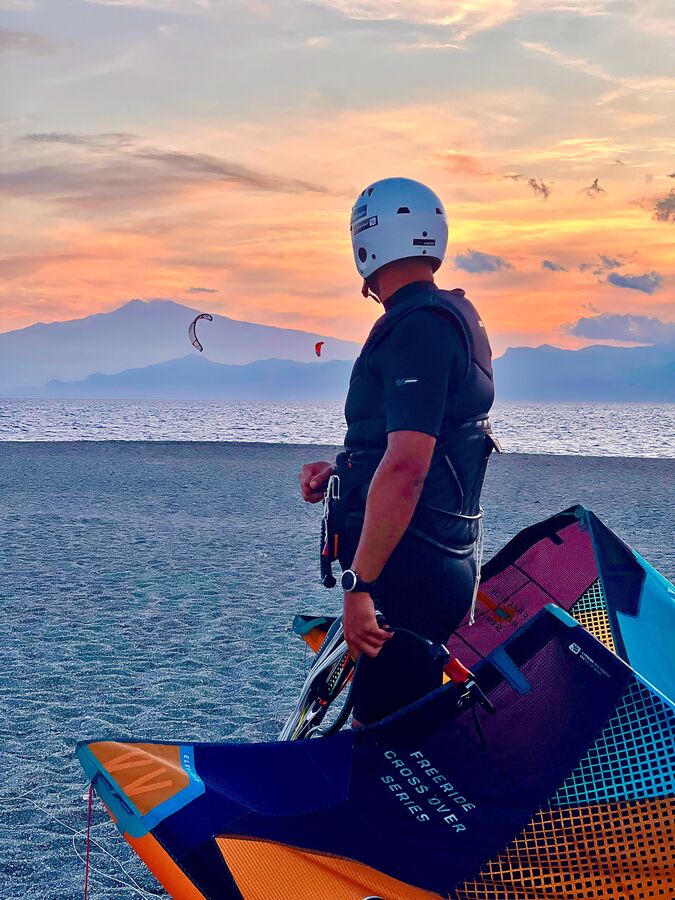
Community — The kite community is among the most welcoming and passionate. Wherever you are in the world, you will find riders ready to share a spot, a tip or a beer at sunset.
Full body fitness — Kitesurfing trains the whole body: legs, core, arms, balance. And it is so much fun that you barely notice you are exercising.
Want to try? Blue Tribe offers courses for all levels. Contact us!
 Italiano
 English
 Deutsch
 Español
 Français