Wondering what to do in Reggio Calabria? You're in the right place. Reggio is one of Italy's most underrated cities: it has the Riace Bronzes, a seafront promenade facing Sicily and Mount Etna, villages perched above the sea half an hour away, trekking mountains right behind it, and one of the most reliable winds in the Mediterranean for kitesurfing and wingfoiling.
This is the Reggio Calabria travel guide we wish we had found ourselves: no copied lists, only places, flavours and experiences we know first-hand. Here are 25 things to do in Reggio Calabria and the surrounding area, grouped by type, with distances, the best time to go, practical tips, 1-, 3- and 7-day itineraries, and answers to the questions everyone asks before leaving.
Short on time? Here's the summary. These are the activities we recommend to anyone visiting the city for the first time:
Now let's go into detail, one experience at a time.
You can explore central Reggio on foot in a day. Almost everything that matters lies along a line parallel to the sea: Corso Garibaldi, the main street for shopping and evening strolls, and the seafront, where the city truly comes alive.
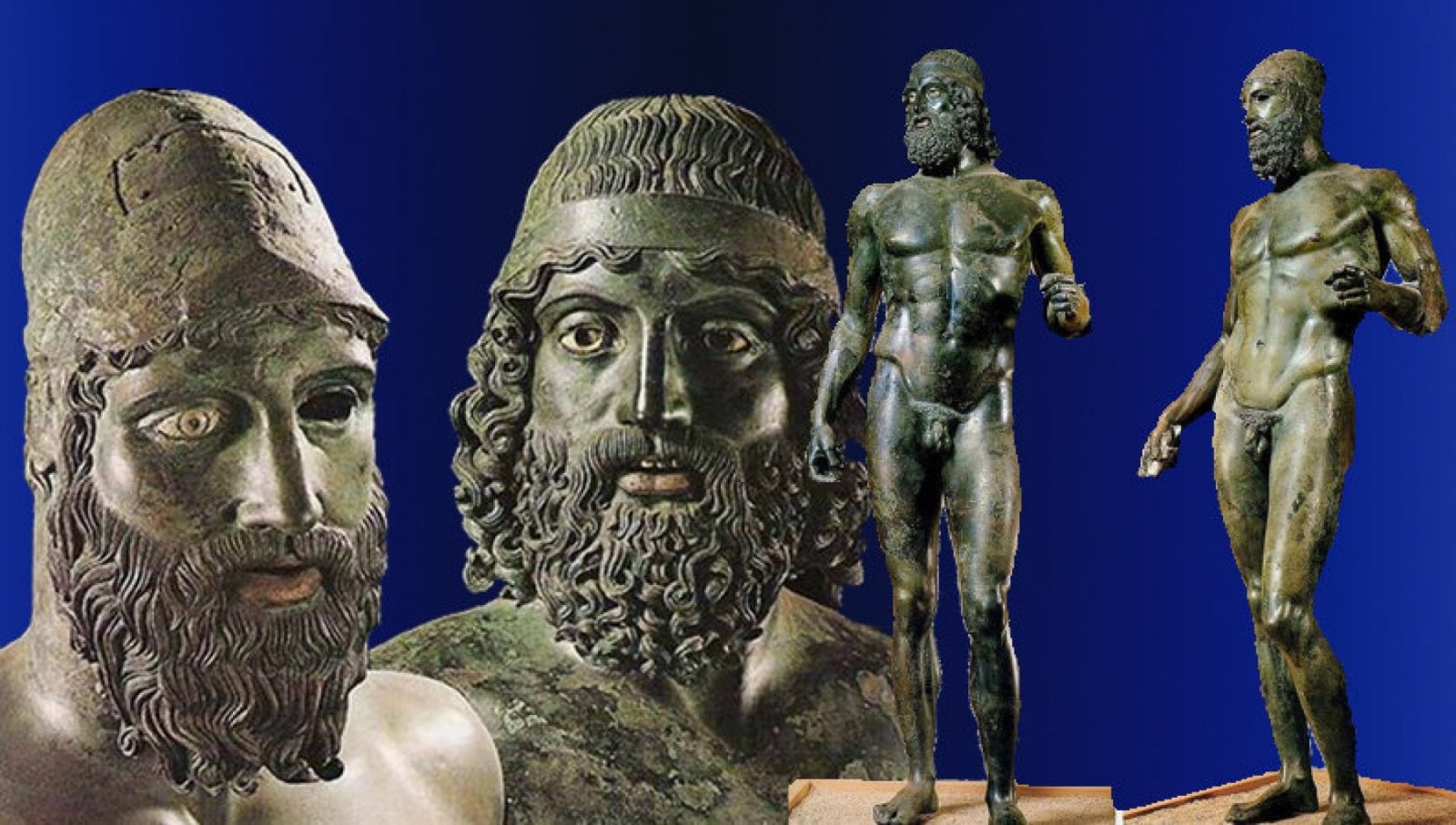
They are the reason many people come to Reggio, and rightly so. The Riace Bronzes are two Greek bronze statues from the 5th century BC, found on 16 August 1972 on the seabed off Riace Marina, on the Ionian coast. In person they are breathtaking: the detail of the muscles, beards and hair leaves even those who know nothing about archaeology speechless.
The MArRC – National Archaeological Museum of Reggio Calabria is not just the Bronzes: it holds one of the most important collections of Magna Graecia, from the Head of the Philosopher to the finds from Locri.
Opening hours and prices may change: always check the official museum website before you go.
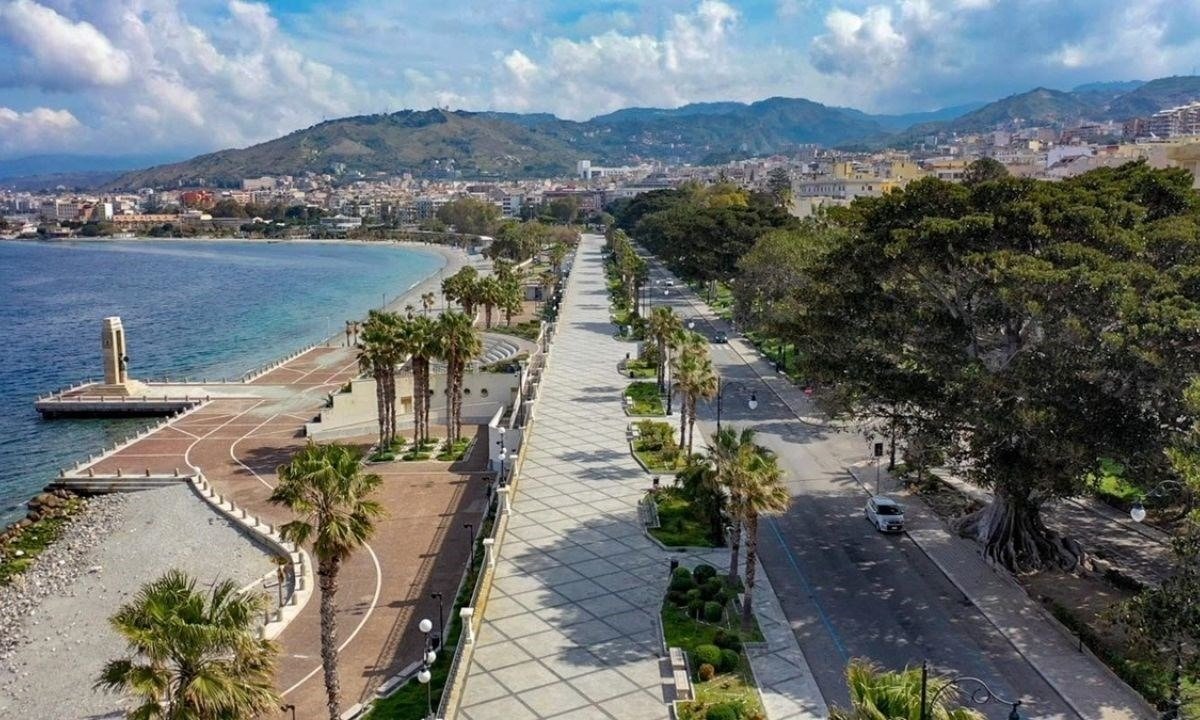
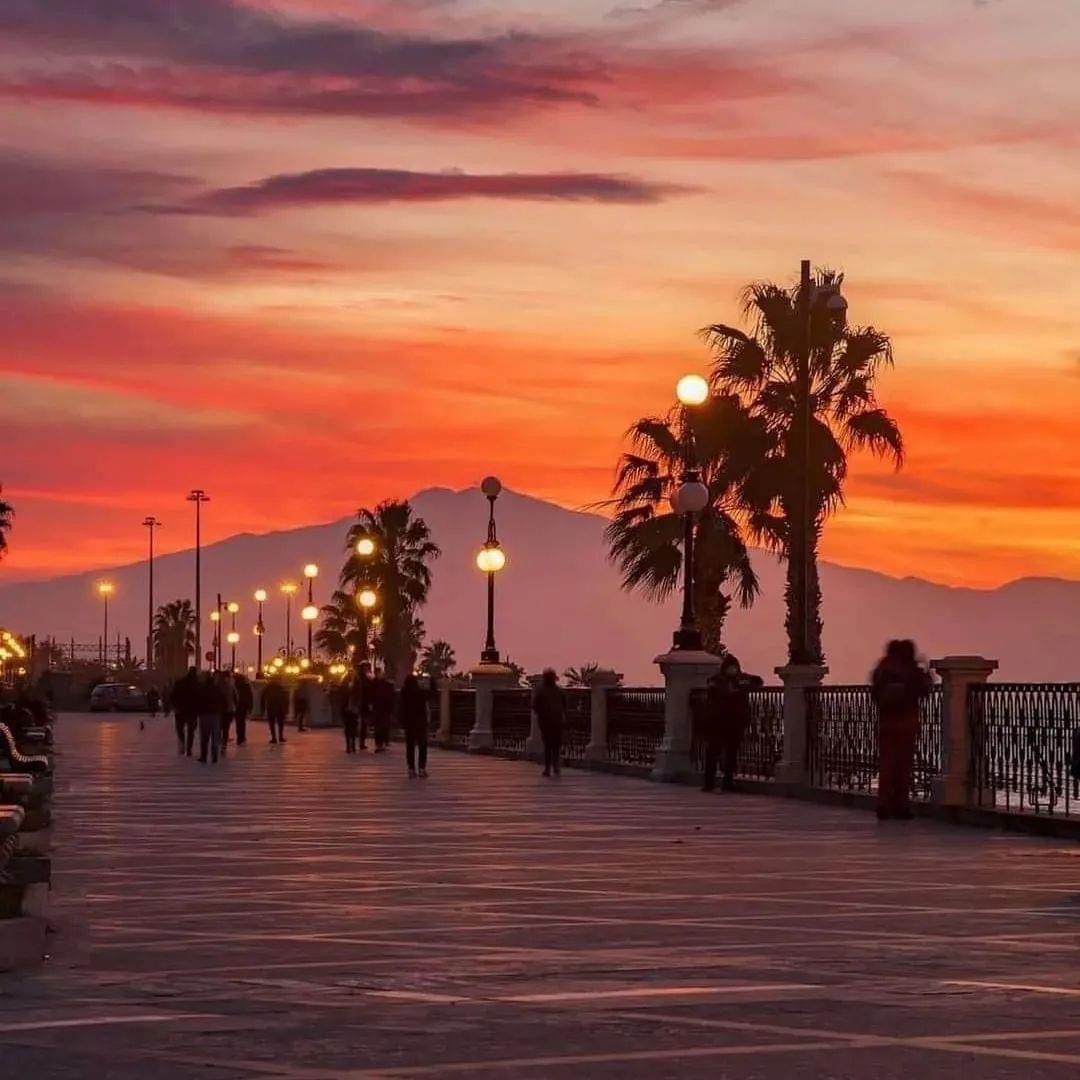
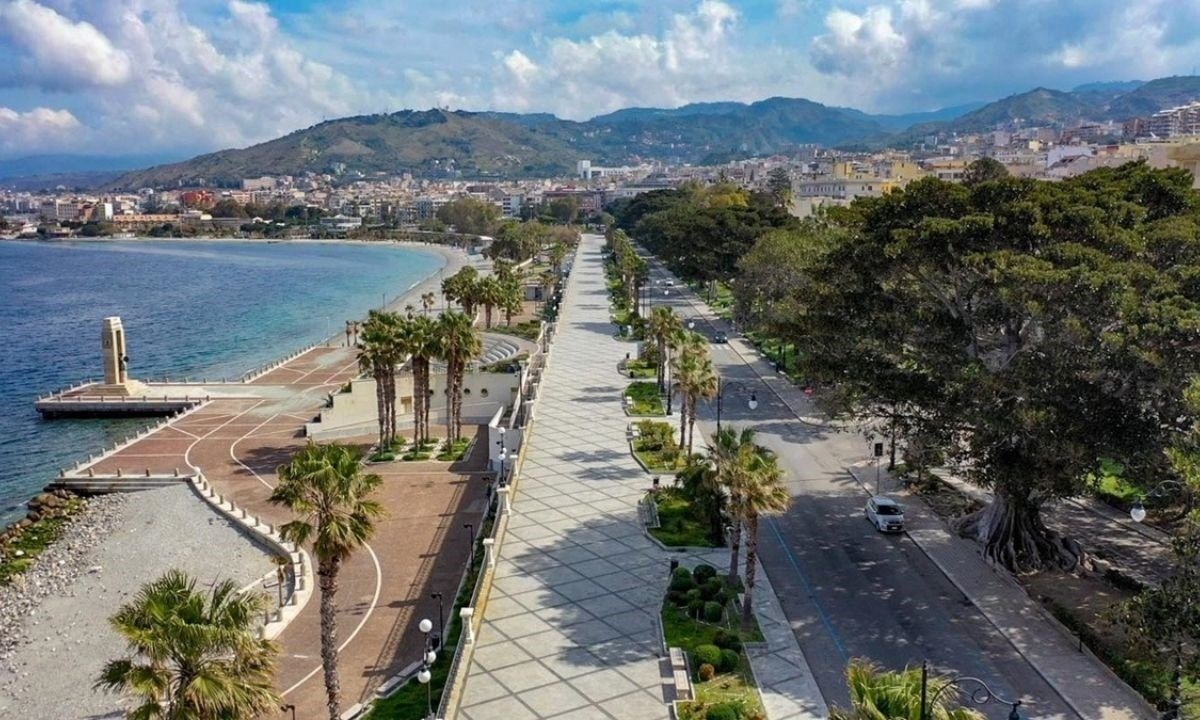
The Lungomare Italo Falcomatà is the heart of Reggio Calabria: almost two kilometres of promenade lined with palm trees, giant ficus, Art Nouveau villas and monuments, with the Strait of Messina and Sicily just a few kilometres away. On clear days, the outline of Mount Etna rises behind Messina.
It is famously called "the most beautiful kilometre in Italy". A curiosity few people know: the phrase is almost always attributed to the poet Gabriele D'Annunzio, but local historians have never found any evidence that he wrote it, or that he ever visited Reggio. According to the most credible account, the phrase became famous during a 1957 Giro d'Italia broadcast. True or not, one sunset here is enough to understand why nobody has ever questioned it.
Best time: the hour before sunset, when the sun sinks behind the Peloritani mountains and the Strait turns gold.
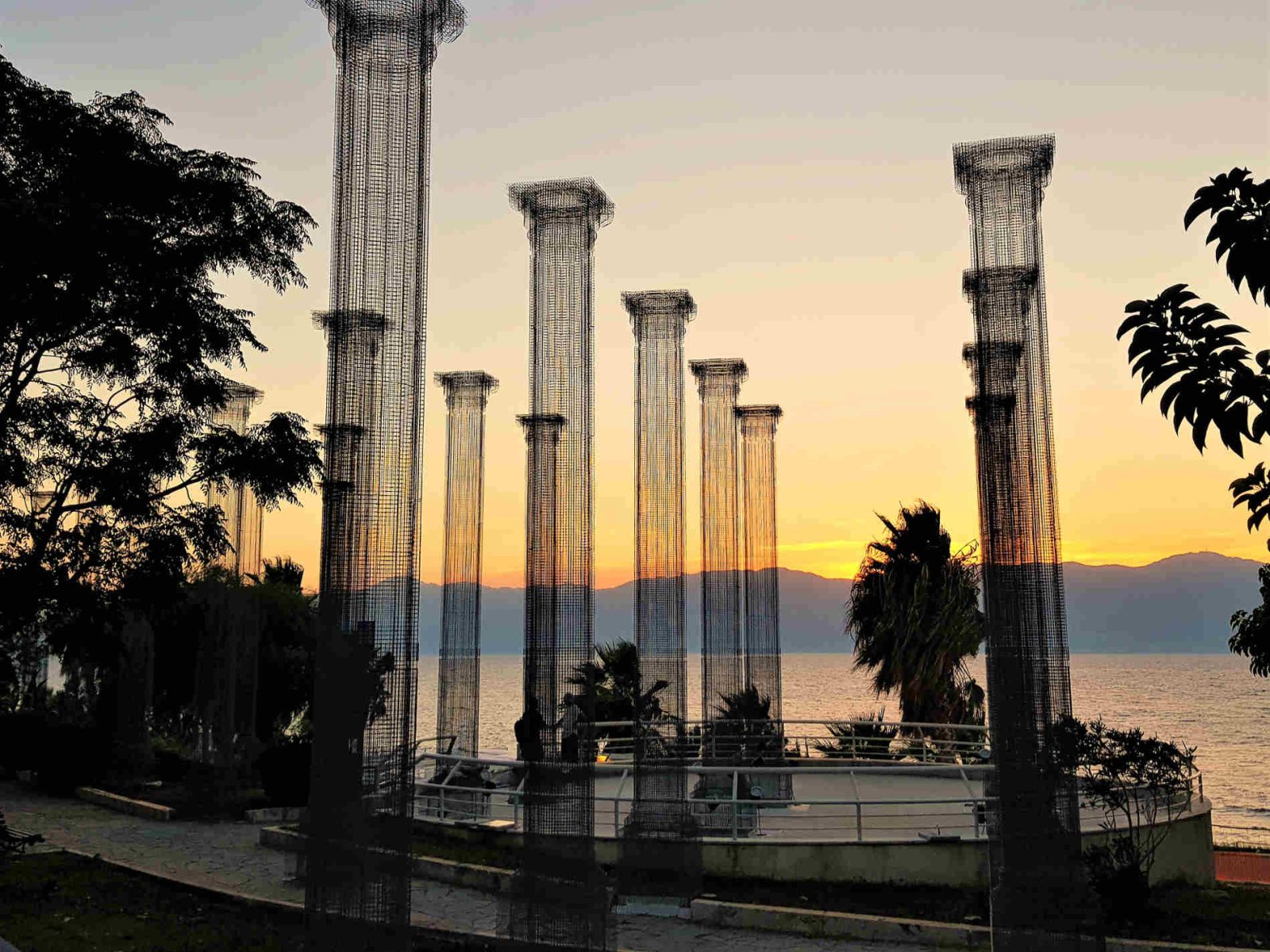
Along the seafront you'll find Opera, the permanent installation by artist Edoardo Tresoldi unveiled in September 2020: a colonnade of 46 columns, 8 metres tall, made of wire mesh, set in a 2,500-square-metre park. The columns are "transparent": through them you see the sea, the sky and Sicily, as if classical architecture were made of air.
It's one of the most photographed spots in Reggio Calabria, especially at sunset and in the evening, when it lights up. Free entry.
Walking along the seafront, you pass through 2,500 years of history almost without noticing. Near Piazza Camagna you can see the longest stretch of the Hellenistic walls of ancient Rhegion, probably from the 4th century BC; a little further on are the Roman Baths, brought to light between the late 19th century and the reconstruction work that followed the 1908 earthquake.
You can see them for free from the street at any time: they are fenced but fully visible, below the level of the promenade.
In the heart of the old town, the Aragonese Castle is the city's main fortification. Its origins date back to the Byzantine era; what we see today is mainly the two large crenellated round towers from the Aragonese period, which survived the earthquakes. It often hosts exhibitions and events, and from the top it offers a lovely view over the city and the Strait.
The Cathedral of Reggio Calabria, the largest church in Calabria, was rebuilt after the 1908 earthquake. A short walk away is Piazza Italia, the city's institutional heart, while Corso Garibaldi runs parallel to the sea, the street for evening strolls, shops and gelato. It's the right place to feel the rhythm of Reggio: slow by day, buzzing on summer evenings.
The Strait of Messina is one of the places in the world where you can observe the Fata Morgana, a rare mirage that makes the Sicilian coast appear distorted, doubled or floating above the water, sometimes closer than it really is. The phenomenon is caused by layers of air at different temperatures acting like a lens, and it appears when the air is crystal clear and the sea calm, most often on summer mornings.
It can't be booked or guaranteed, and that's exactly the beauty of it. If you're lucky enough to see it, you'll be telling the story for years. Legend has it that the fairy Morgana made Sicily appear within reach to deceive an invading king.
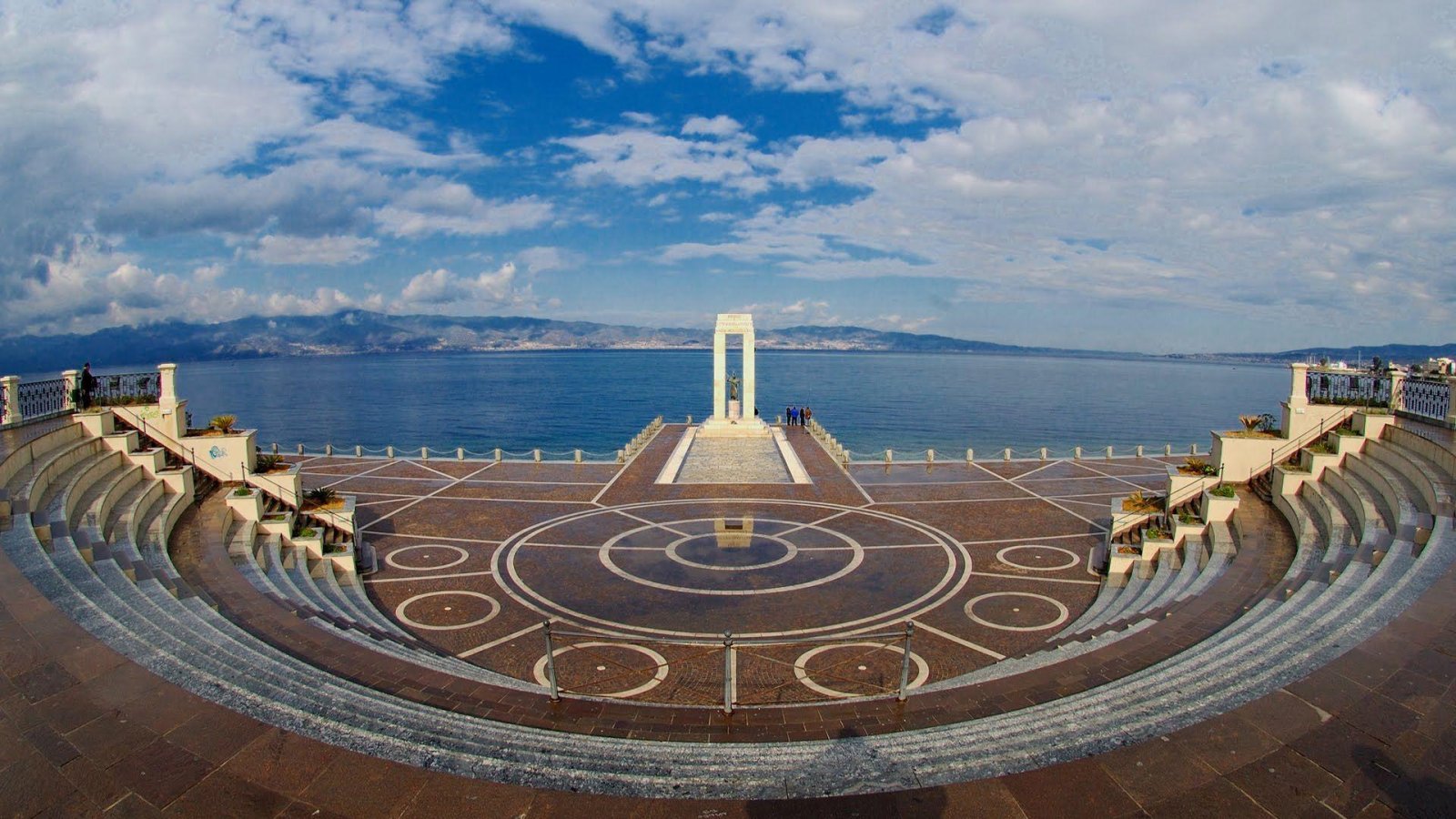
The Arena dello Stretto is the amphitheatre overlooking the sea at the end of the promenade. In summer it hosts concerts, shows and open-air cinema; the rest of the year it is simply one of the most scenic places to sit and watch the Strait with a gelato in hand.
If you really want to understand the city, go with a guide. Archaeotrekking in Reggio Calabria is a walk of about two hours through history, myth and landscape: from the Greek walls to the monumental seafront, to discover a city that hides millennia beneath its surface. Best early in the morning or late in the afternoon.
This is where this guide becomes different from all the others. Almost every article about Reggio Calabria talks about museums and monuments, and forgets the activities in Reggio Calabria that make it unique: this city has some of the best wind conditions in the Mediterranean. The Strait of Messina acts as a natural funnel: air is channelled between Calabria and Sicily and speeds up. For sea lovers, the result is a playground.
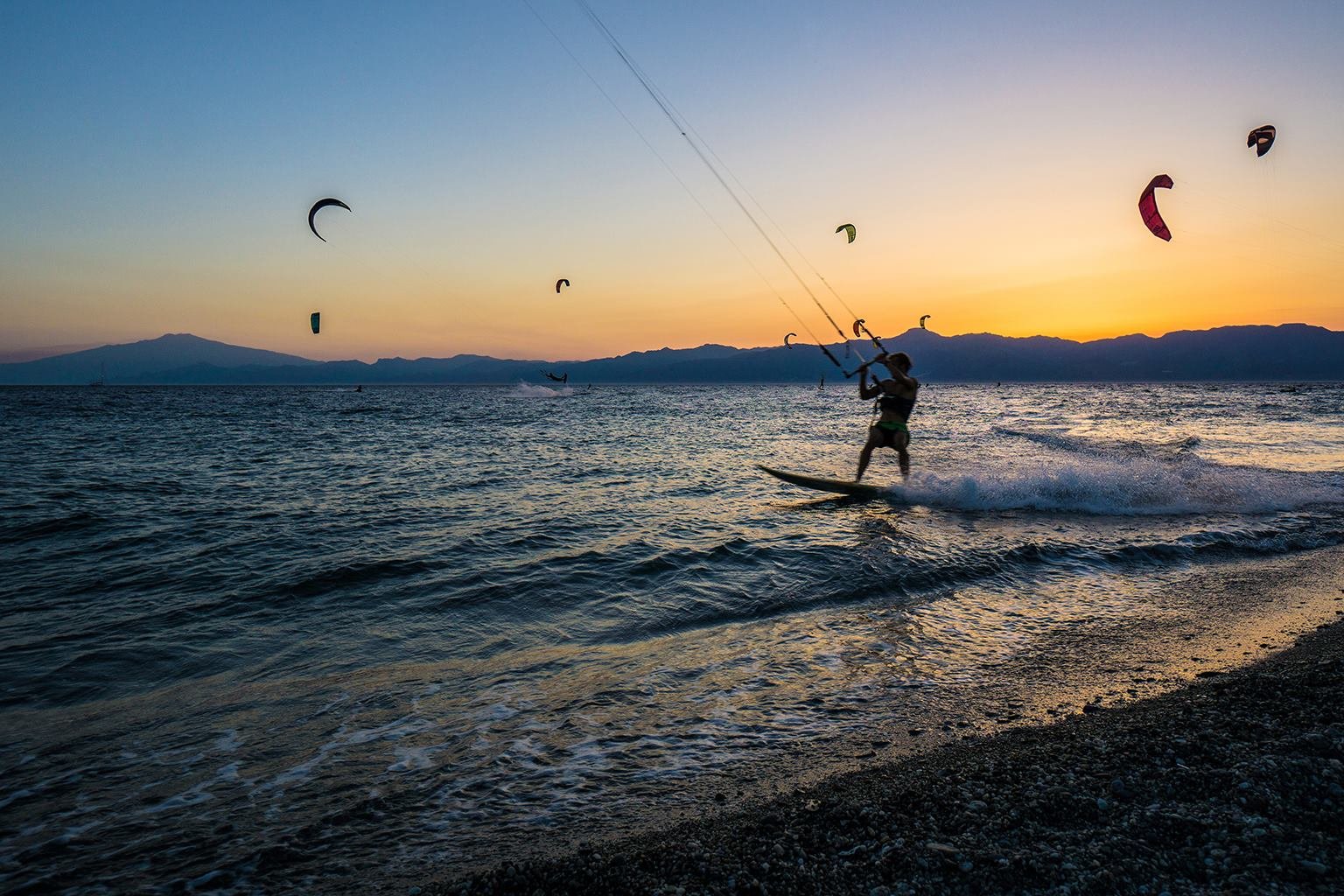
If there's one experience that turns a holiday in Reggio Calabria into an unforgettable memory, this is it. Punta Pellaro, about 15-20 minutes by car from the centre and around ten minutes from the airport, is considered one of the best kitesurfing spots in Italy. In season, the thermal wind arrives with impressive regularity almost every afternoon, often between 15 and 25 knots, with Sicily and Etna right in front of you.
The good news is that no experience is needed. With the Kite Discovery lesson (2 hours, equipment included) you learn to fly the kite safely with an IKO-certified instructor and feel the pull of the wind for the first time. Those who fall in love with it, and almost everyone does, can continue with the Beginner Kitesurf Course to ride independently.
"At first I thought it was impossible." It's the sentence we hear most often at the end of a lesson, always said with the same incredulous smile.
Not sure what it is yet? Read our guide What is kitesurfing, explained properly.
Wingfoiling is the fastest-growing water sport in the world: you hold an inflatable wing, stand on a board with an underwater fin (the foil) and, as you pick up speed, the board lifts and you glide silently above the water. It's more intuitive than it looks and works even in light wind.
The best way to start in Reggio Calabria is the Wing Discovery lesson, followed by the Beginner Wingfoil Course. To find out more: Wingfoil, the new sport revolutionising the sea.
Even if you have no intention of getting in the water, go to Punta Pellaro on a windy afternoon. Dozens of colourful kites jumping over the Strait, with the volcano in the background and the sun setting behind Sicily: it's a sight you won't find in any other Italian city. Bring a towel and something to drink, and stay until sunset.
SUP (stand up paddle) is the perfect activity for windless mornings, when the Strait is as flat as a table. You learn it in a few minutes, it's suitable for all ages and it lets you see the coast from a new perspective. You can start with a beginner SUP lesson or join a two-hour coastal SUP tour.
The Costa Viola, the stretch of coast between Villa San Giovanni and Palmi, owes its name ("Violet Coast") to the purple reflections the sea takes on at sunset. The most beautiful way to see it is from the water: the Sunset Aperitif on a Sailing Boat departs from Reggio Calabria and combines sailing, a swim with snorkelling and local flavours on board as the sun sets behind the Aeolian Islands. It's one of the most romantic experiences in Calabria.
The seabed of the Strait and the Costa Viola is among the richest in the Mediterranean, thanks to currents that bring nutrients and constantly oxygenated water. Rock walls, colourful gorgonians and surprising biodiversity make Scilla and its surroundings a favourite destination for divers. Even with just a mask and snorkel, the coves of the Costa Viola offer crystal-clear water.
Few people know that the Aeolian Islands can be reached directly from Reggio Calabria. Roughly from mid-June to mid-September there is a hydrofoil service from Reggio's port to Vulcano, Lipari, Salina, Panarea and Stromboli, with crossing times of around two hours to Lipari. Check timetables and availability in advance: in high season, seats sell out quickly.
Reggio is a perfect base: in less than an hour you can be in a fishing village, a ghost town or at 1,300 metres among beech forests. Here are the day trips that are worth the journey.
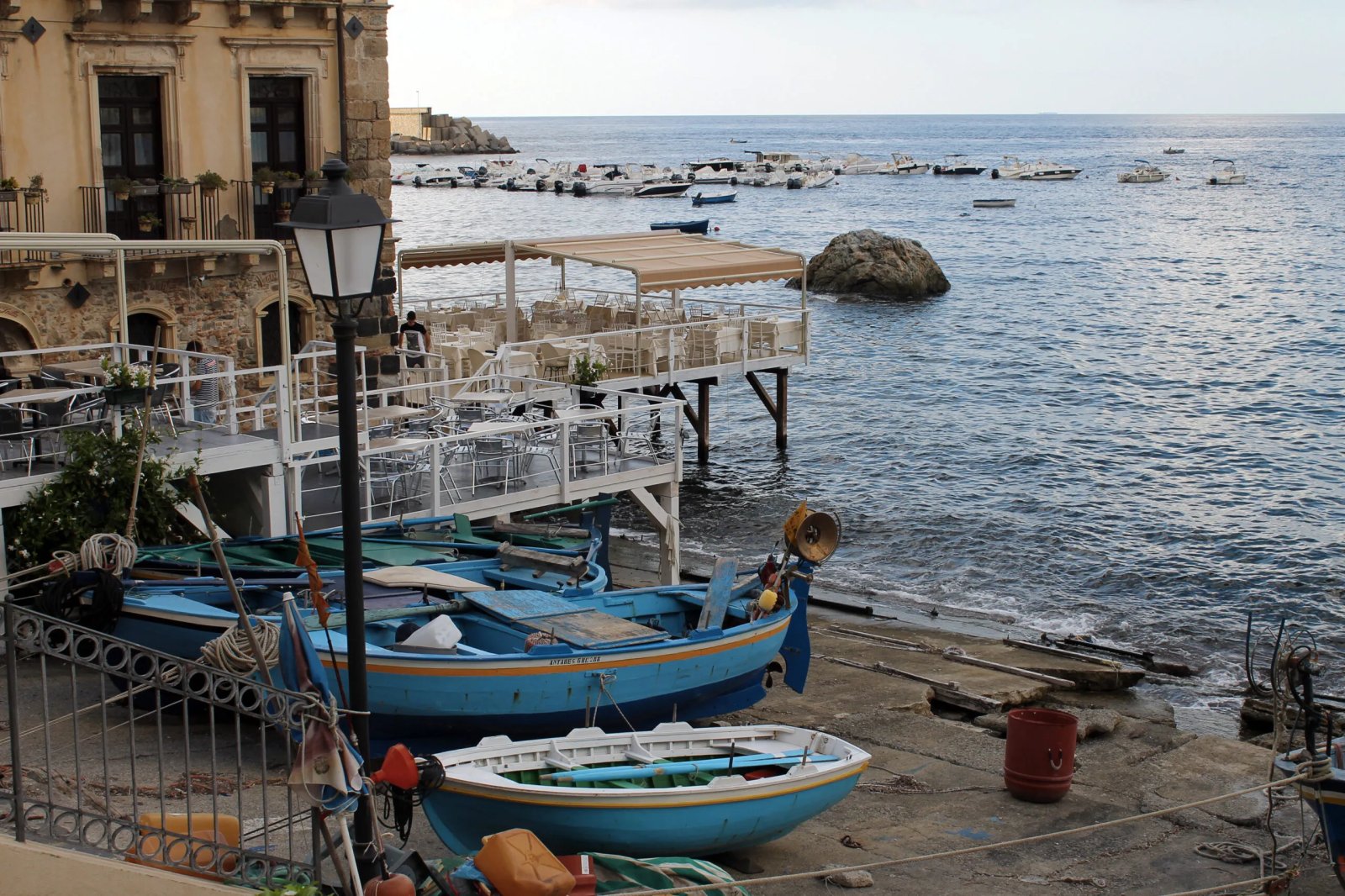
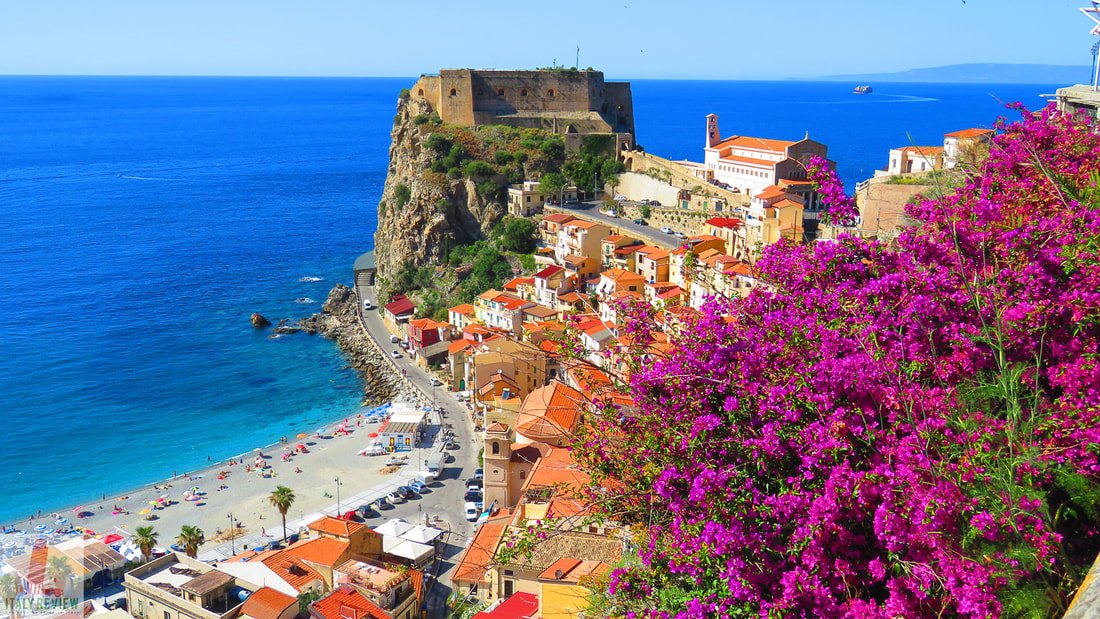
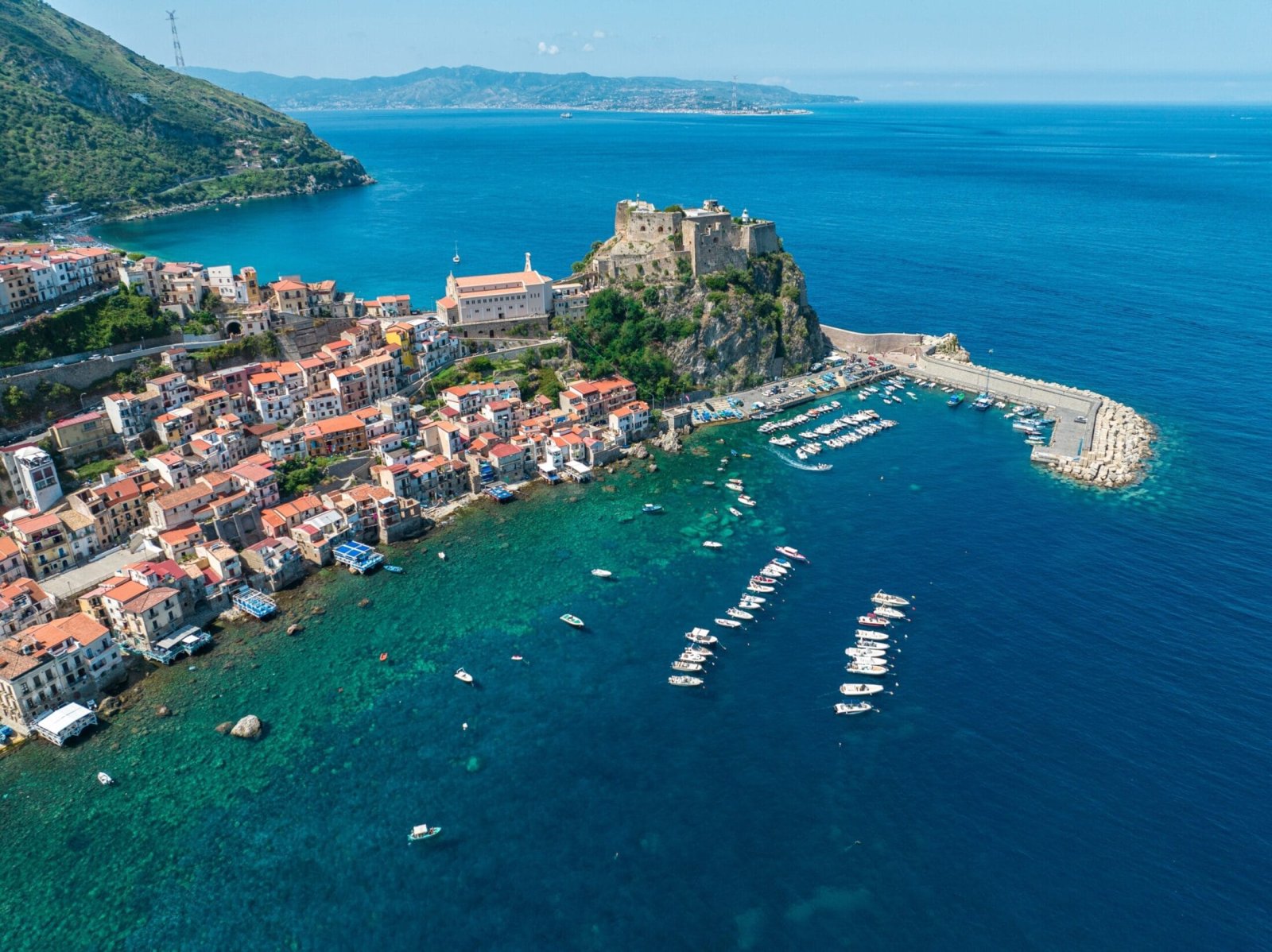
About half an hour from Reggio, Scilla is one of the most beautiful villages in Italy. It is dominated by Castello Ruffo, built on the rock that mythology linked to the monster Scylla from the Odyssey; below lies the beach of Marina Grande. But the real magic is Chianalea, the old fishermen's quarter, with houses built directly on the rocks and boats moored beneath the windows.
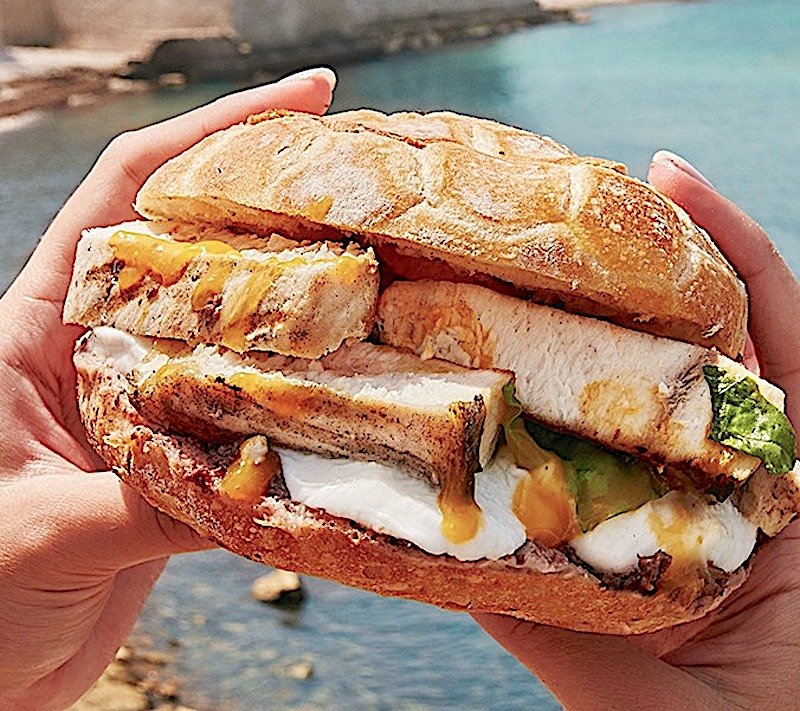
Don't miss: a swordfish sandwich eaten with your feet almost in the water, and the sunset from the panoramic square above the harbour.
Continuing along the Tyrrhenian coast you reach Bagnara Calabra, the historic capital of swordfishing, and Palmi, with Tonnara beach and cliffs plunging into Caribbean-coloured water. From May to August, with a bit of luck, you can see the feluche at work: the traditional swordfishing boats with a very tall lookout tower and a long gangway at the bow, a tradition handed down in the Strait for centuries.
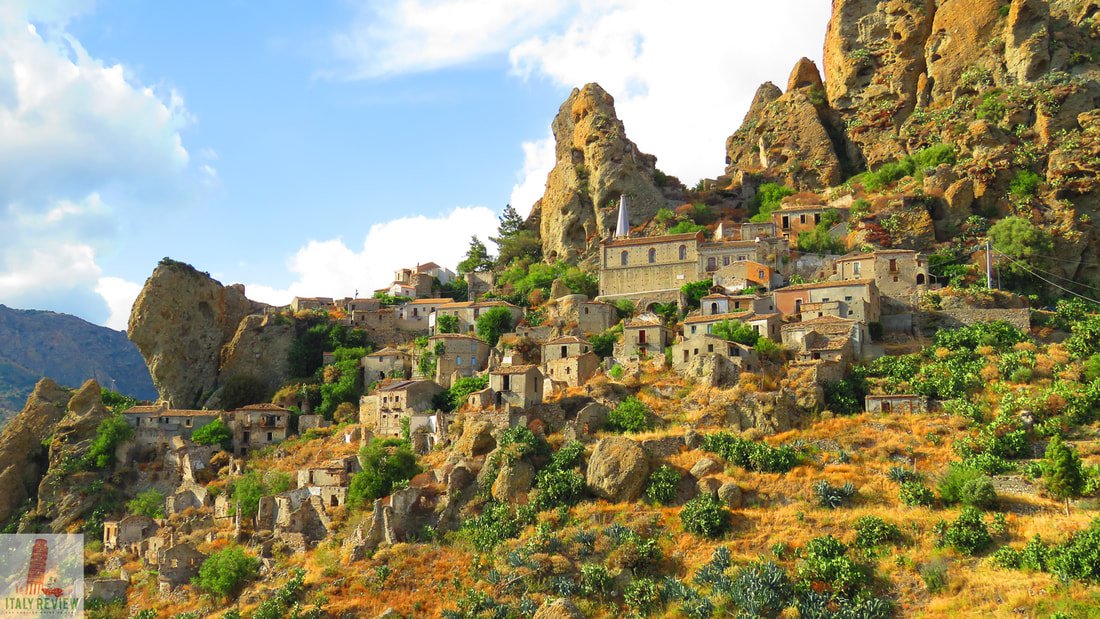
About 35 minutes from Reggio, on the Ionian side, lies one of the most photogenic places in Southern Italy. Pentedattilo is an abandoned village built at the foot of a rock that rises towards the sky like a hand with five fingers (from the Greek penta daktylos). Among medieval ruins, silent alleys and bloody legends, the village has come back to life thanks to artisans and a film festival held in summer. Go in the late afternoon, when the light sets the rock aglow.
Behind the city rises the Aspromonte National Park: in less than an hour you go from the sea to beech and pine forests. Gambarie, at around 1,350 metres, is where the locals go to the mountains: cool in summer, with ski slopes in winter, and views that on clear days take in the Strait and Etna.
For walkers, the hike to the Maesano Waterfalls (also known as the Amendolea Waterfalls), at around 1,280 metres in the municipality of Roccaforte del Greco, is one of the most beautiful in Calabria. It's the paradox that makes Reggio unique: skiing in the morning and swimming in the sea in the afternoon is genuinely possible on certain spring days.
On the Ionian coast, about an hour and a half by car, Gerace is a medieval village awarded the Orange Flag, the Italian Touring Club's quality label for inland towns: cobbled lanes, noble palaces, unexpected squares, a monumental cathedral and the remains of a Norman-Swabian castle overlooking the sea. It deserves a full day, perhaps combined with nearby Locri and its archaeological excavations.
From Reggio, Sicily is literally a stone's throw away. From Villa San Giovanni, about 15 kilometres away, ferries leave constantly and the crossing takes around 20-40 minutes depending on the company; there are also passenger-only hydrofoils from Reggio's port. In a day you can visit Messina and continue to Taormina, with its ancient theatre perched above the sea.
A local's tip: enjoy the crossing out on deck. Seeing the Strait from the middle, with Calabria on one side and Sicily on the other, is an experience in itself.
About an hour and a half's drive north, Tropea is Calabria's most famous postcard: the old town on the cliff, the sanctuary of Santa Maria dell'Isola and crystal-clear sea. If you have a week, give it a day, perhaps tasting its famous red onion.
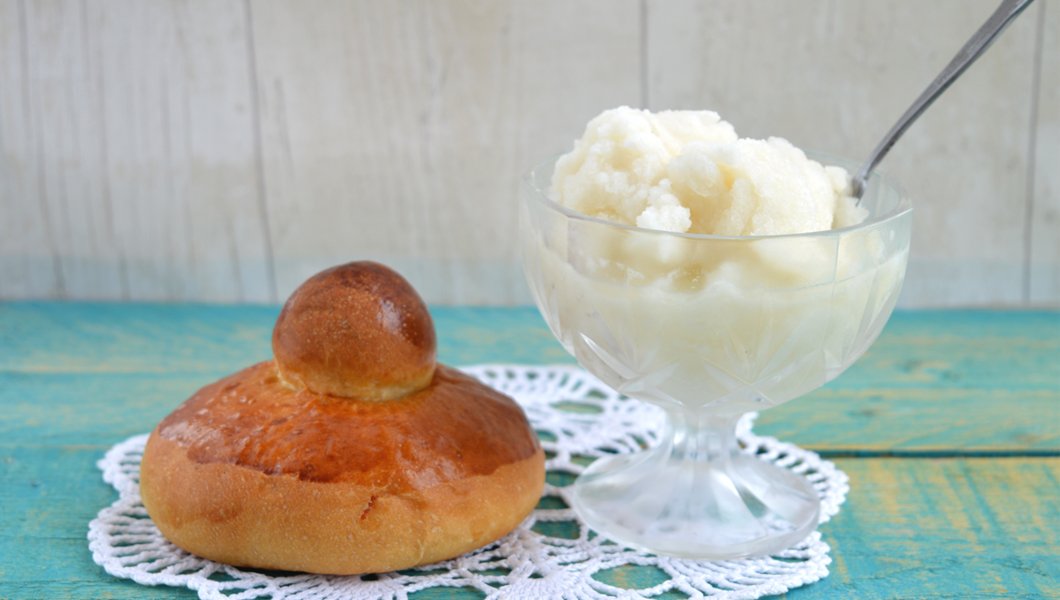
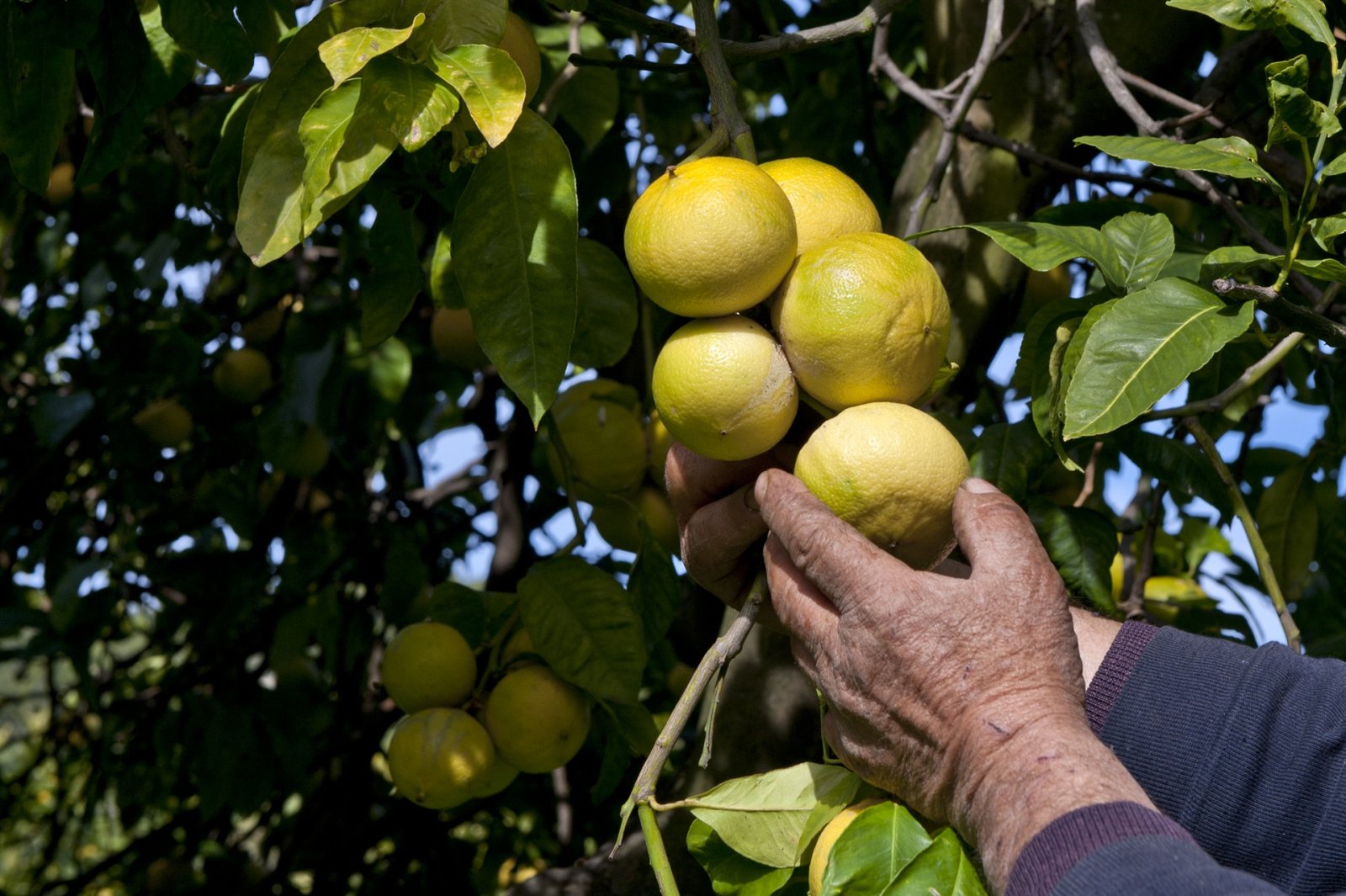
A holiday in Reggio Calabria is also remembered through the palate. Here's what you absolutely must taste:
And in the evening? In summer, life moves to the seafront and the beach: sunset aperitifs, bars by the sea and barbecues with friends when the wind drops.
If you're in Reggio in September, don't miss the city's most heartfelt patron saint festival. From the second Saturday of September, the painting of the Madonna della Consolazione is carried in procession from the Hermitage down to the Cathedral on the shoulders of its bearers, through an immense crowd. Days of celebration follow, with illuminations, stalls and fireworks over the sea.
With seven days you can experience Reggio the way locals do and, above all, really learn a sport. Our advice: spend your mornings on sightseeing and day trips (Scilla, Pentedattilo, Aspromonte, Gerace, Tropea, the Aeolian Islands, Taormina) and your afternoons, when the wind picks up, on a kitesurfing or wingfoiling course. At the end of the week you'll go home with memories of the Bronzes, swordfish and Etna, plus one more thing: you'll know how to fly over the water.
Reggio has a mild climate all year round, with long summers and short, gentle winters. Here's what to expect:
The centre and the seafront are perfect if you want to explore the city on foot and enjoy the evenings. The southern area, between the airport and Pellaro, is ideal if you're coming for the sea, kitesurfing and wingfoiling. The northern area, towards Gallico and Catona, is convenient for Scilla and the Costa Viola.
We have selected some partner accommodations that we know personally:
All options are on the Blue Tribe services and experiences page.
The unmissable experiences in Reggio Calabria are: seeing the Riace Bronzes at the National Archaeological Museum, strolling along the Lungomare Falcomatà at sunset, trying kitesurfing or wingfoiling at Punta Pellaro, visiting Scilla and Chianalea, enjoying a sunset aperitif on a sailing boat along the Costa Viola, eating swordfish and granita, exploring Pentedattilo and the Aspromonte, and taking a trip to the Aeolian Islands.
In one day you can see the Riace Bronzes at the National Archaeological Museum, walk around the old town between the Cathedral, the Aragonese Castle and Corso Garibaldi, and end the day at sunset on the Lungomare Falcomatà with the Greek walls, the Roman baths and Tresoldi's columns. If it's windy, swap the afternoon in town for a kitesurfing discovery lesson at Punta Pellaro.
The most beautiful places nearby are Scilla and the village of Chianalea (about 30 minutes), the ghost village of Pentedattilo (about 35 minutes), the Aspromonte with Gambarie and the Maesano Waterfalls (less than an hour), the Costa Viola with Bagnara and Palmi, Gerace, Tropea, and Sicily, with Messina and Taormina, just across the Strait.
In summer in Reggio Calabria you go to the beach, try kitesurfing, wingfoiling or SUP at Punta Pellaro, enjoy a sunset aperitif on a sailing boat along the Costa Viola, visit Scilla, take the hydrofoil to the Aeolian Islands and, in the evening, stroll along the seafront, with concerts and events at the Arena dello Stretto.
With children, the Archaeological Museum (free for under-18s), walks along the seafront, the beaches, SUP lessons suitable for all ages, trips to Scilla and the Aspromonte forests at Gambarie all work very well. For older kids, a kitesurfing or wingfoiling discovery lesson with qualified instructors is an unforgettable adventure.
Yes. Punta Pellaro is one of Italy's most popular spots for beginners too, thanks to the regular thermal wind on afternoons during the warm season and areas with shallow, flat water. What matters is learning with a school and certified instructors: you start with a two-hour discovery lesson and continue with a beginner course.
The best months are May, June, September and October: warm sea, fewer crowds, lower prices and excellent conditions for water sports. July and August are perfect for the beach and events, but they are the busiest months.
A full-price ticket to the National Archaeological Museum of Reggio Calabria costs €10, the reduced ticket for young people aged 18 to 25 costs €2, and entry is free for under-18s. The museum is open Tuesday to Sunday from 9:00 am to 8:00 pm. Always check the official website before your visit.
Many of the best experiences are free: the stroll along the Lungomare Falcomatà, Tresoldi's columns, the Greek walls and Roman baths seen from the street, the Cathedral, the sunset over the Strait, hunting for the Fata Morgana and the spectacle of kiters flying in front of Etna at Punta Pellaro.
We wrote this guide because we love Reggio Calabria, and because we believe the most beautiful way to discover it is from the water, with the wind in your hands and Sicily before your eyes.
Blue Tribe is Reggio Calabria's kitesurfing, wingfoiling and SUP school, based on the beach at Punta Pellaro. We teach with certified instructors, in several languages, both people who have never seen a kite and those who want to take their riding to the next level. We are open all year round.
Whether you're twenty or sixty, whether you're looking for adrenaline or just a different kind of afternoon, there's a place for you in the tribe:
Write to us at info@bluetribe.surf or call us on +39 392 776 7500: we'll help you plan your holiday in Reggio Calabria and choose the right experience for you.
The wind arrives almost every afternoon. We'll be there. The tribe is waiting for you.
 Italiano
 English
 Deutsch
 Español
 Français